
In West Virginia, the nation’s most coal-reliant state, electricity bills are surging. Rates climbed 34% between 2019 and 2024, hitting working-class families already shouldering inflated grocery bills and rising health care costs. To make ends meet, West Virginians are delaying car payments, selling jewelry, skipping medications, forgoing holiday gifts. For some, utilities alone can eat up an entire paycheck.
“When your electric bill is higher than your house payment, there’s something wrong,” Genoa resident Dwan Marcum told Mountain State Spotlight.
The cost of keeping the lights and heat on, especially in the cold winter months, falls hardest on low-income families and families of color. More than a third of West Virginia households spend over 6% of their income on electricity and other power-related costs, leaving less and less left over to meet life’s basic needs. Thousands are facing February without access to safe heat.
Meanwhile, billionaire Silicon Valley executives are devouring as much West Virginia electricity as they can find. The booming growth in power-hungry AI data center projects has put unprecedented strain on the region’s electric grid—large “hyperscale” data centers can demand thousands of megawatt hours of electricity per year, enough to power entire cities.
Data center power demand is one of the principal causes of soaring rate hikes in West Virginia, in neighboring Ohio and Pennsylvania, throughout the regional PJM utility grid, and across the nation. But electricity prices aren’t rising at the same rate for everyone.
In fact, rates for regular families are actually rising faster than rates for industrial users, corporations, and the enormous data centers responsible for driving rapid growth in electricity demand. From 2022 to 2024, residential electricity prices leapt by 10%. Prices for data centers and other commercial customers increased by just 3% in the same period, and industrial prices actually fell by 2%, Yale Climate Connections reports.
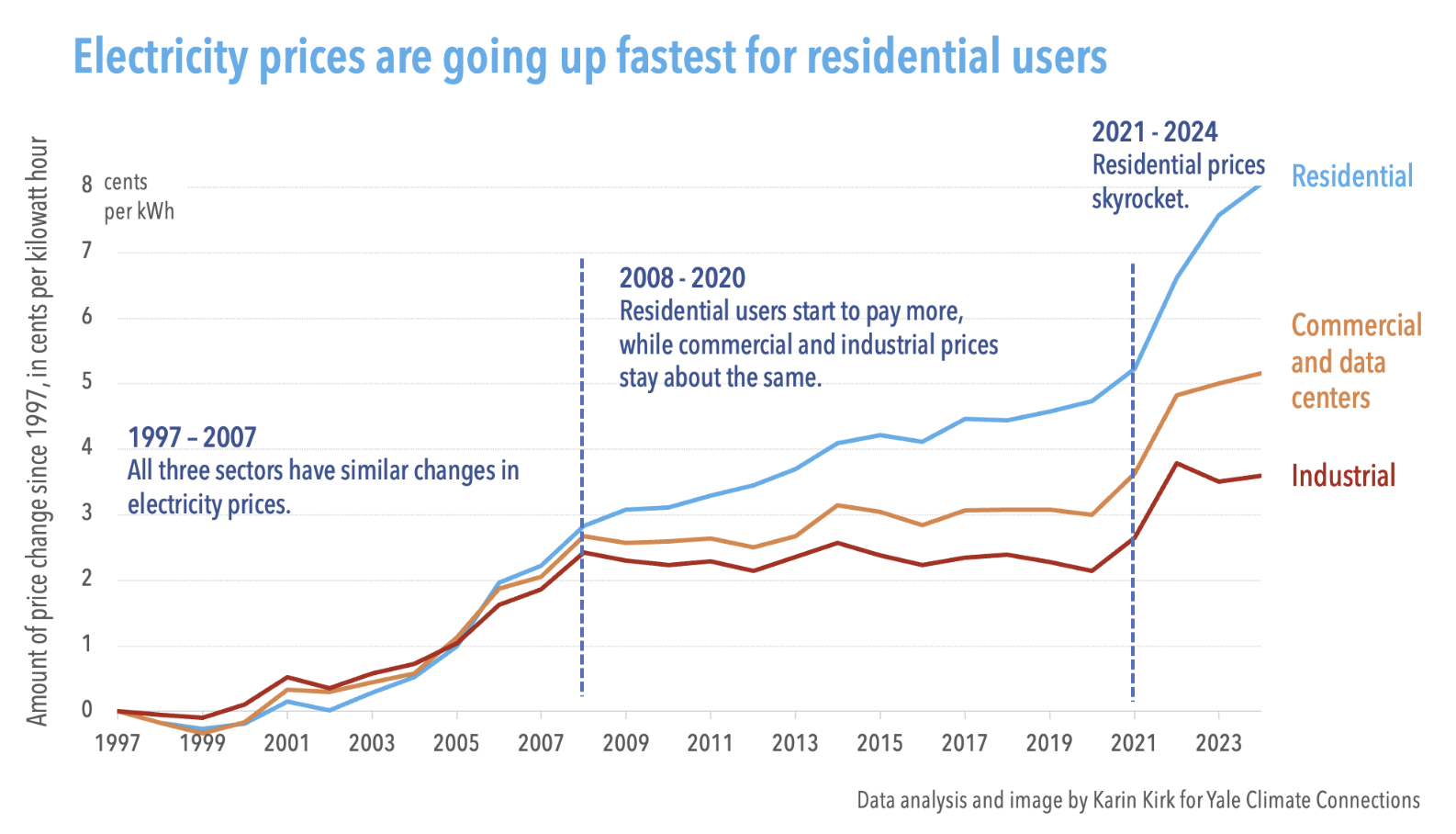
In other words, working-class families charging phones, vacuuming carpets, or turning on a nightlight are seeing their bills rise three times faster than the sprawling, billionaire-owned data center projects that can gobble up as much electricity as entire cities.
Factor in the environmental damage these projects can cause, their obscene water use, their threat of constant light and noise pollution, their propping up of old coal plants and new gas plants and poor contributions to long-term job growth and local economic development, and it’s little wonder that frustration is mounting.
Community pushback
Across the region, ratepayers are calling for energy affordability and fighting the data center development that threatens to push rates even higher. Concerned residents are getting organized, flooding town halls, penning op-eds and letters to the editor, even trawling permits and industry documents for data on projects’ water usage and energy consumption. The pushback is getting attention.
“I’ve never seen the citizens of this county so universally upset and perturbed about something as I have this particular issue [of data centers],” Gene Krebs, a former Ohio lawmaker from Preble County, told Signal Ohio.
The frustration is showing up in public opinion research, too. More than four in ten (42%) Pennsylvanians oppose data centers being built in their communities, according to an Emerson College poll conducted last December. Seven in ten are concerned about data centers’ electricity (71%) and water (70%) use, and roughly 43% say data centers will have a negative impact on the cost of living.
Building opposition to these enormous and well-resourced projects is a huge endeavor. Some liken it to fighting Goliath. But in communities across Appalachia, data center resistance is effecting real change. This month, residents of Lordstown, Ohio won a moratorium on data center permits, replicating the success of similar fights in Ashville, Waterville, and Jerome Township. In Pennsylvania and West Virginia, where legislation has hampered or hamstrung local authority to regulate data center projects, residents are grilling regulators and state officials, racking up thousands of petition signatures, and flooding proposed permits with concerns.
The chorus of opposition has convinced some data center developers to pack up and leave. Twenty-five data center projects across the US were scrubbed due to community opposition last year, quadruple the previous year’s total, Heatmap reports. They say roughly 40% of data centers that face sustained local opposition are eventually canceled.
It’s clear that Appalachians—and Americans from all parts—are tired of false promises, of sky-high prices and corporations pushing polluting projects on communities they deem sacrifice zones. Real, shared prosperity and energy affordability comes from investing in people, enhancing quality of life, and capitalizing on the opportunity to upgrade our energy system with efficiency measures and cheap, clean power.