
[button link=”https://ohiorivervalleyinstitute.naughty-cat.com/wp-content/uploads/2025/01/Abandoned-Wells-Could-Wreak-Havoc-for-Carbon-Storage-in-West-Virginia-FORMAT.pdf” type=”big” color=”red” newwindow=”yes”] Download research brief[/button]
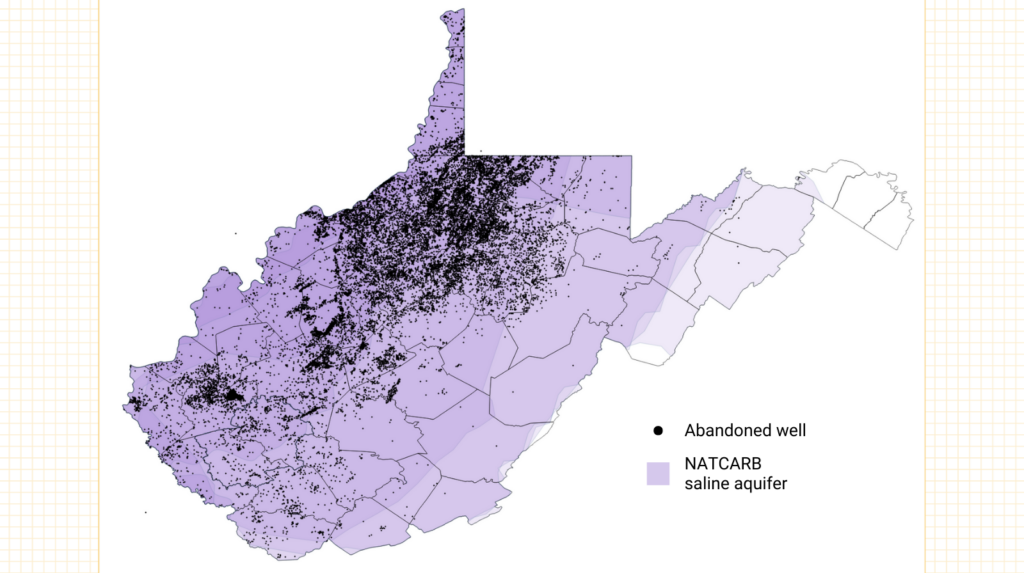
West Virginia’s prospective underground carbon storage formations are overlaid by tens of thousands of abandoned and improperly plugged wells—and potentially hundreds of thousands of additional undocumented wells—through which injected carbon could leak. If allowed to migrate, pressurized carbon could pollute groundwater supplies and threaten nearby communities.
West Virginia, which will soon begin permitting Class VI carbon injection wells, is home to about 28,500 documented abandoned wells, nearly all of which overlie potential carbon storage locations. Researchers estimate there could be 400,000 additional undocumented abandoned wells across the state whose locations are unknown.
Improperly plugged and unplugged abandoned wells could wreak havoc for West Virginia’s plans to build out carbon storage infrastructure. How much leakage is detected, how much is acceptable, and how it will be managed will be determined by a state agency that has not demonstrated its ability to properly administer other injection well programs and that has just one inspector for every 5,100 documented unplugged wells in the state.
West Virginia’s serial regulatory failures and its mismanagement of the Class II well program raises questions regarding the ability of state regulators to achieve the constant monitoring required to ensure the integrity of Class VI wells—the wells used for carbon storage—and to keep residents safe from any risks. Class VI wells are significantly more complex than Class II wells and regulators and developers in the U.S. have relatively little practical experience with the geologic storage of carbon dioxide.
As the pause on federal grants and loans halts critical funding for orphaned well cleanup, analysis suggests West Virginia may need to replug over 25,0000 improperly plugged wells and thousands more in the future as casings deteriorate.
Plugging West Virginia’s scourge of abandoned wells is critical to ensuring public health and safety and a minimum first step for developing carbon storage projects in the state. Many of the state’s nominally plugged wells will need to be replugged to modern standards, and even still, the lifespan of a plugged well is largely unknown.