
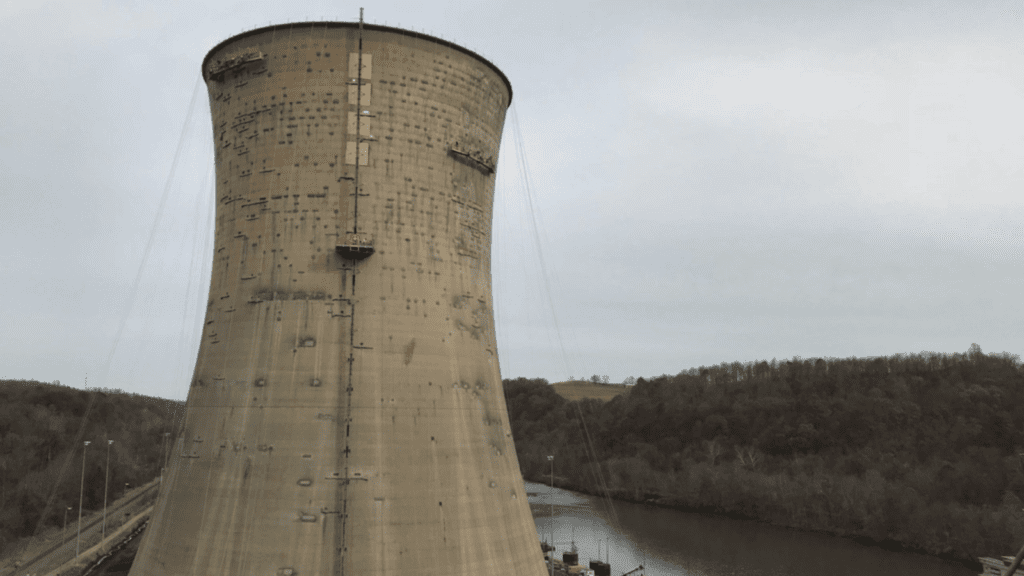
The following public comment was submitted by Senior Researcher Sean O’Leary to the Public Service Commission of West Virginia concerning Case #FE 26-0108-E-CN, a proposal by Monongahela Power Company and Potomac Edison Company to build a 1200 MW combined cycle gas plant at Mon Power’s existing Ft. Martin power station in Monongalia County, West Virginia.
The proposal by Monongahela Power Company and The Potomac Edison Company to build a new 1.2 GW natural gas-fired power plant does not serve the best interests of the companies’ customers and the state of West Virginia. The companies claim that the new plant is needed to replace approximately 400 MW of power that they currently acquire from the PJM energy market and to meet anticipated demand growth from the development of data centers. However, given the exorbitant capital cost of building new gas-fired generation in the current price-inflated environment, it is not clear that the electricity produced by a new gas plant will be less expensive than the PJM market purchases it is meant to replace. At the same time, the companies have not fully and rigorously examined the degree to which the generation deficit they seek to close may be met by inexpensive alternative resources, including energy efficiency, demand response, utility scale wind and solar, distributed generation and storage, and other demand-side resources. Many of these alternative resources are readily or even immediately available. Finally, anticipated load growth driven by data centers can be served at the least cost and with the least risk to the companies’ customers by requiring prospective data center owners to develop and finance their own generating resources. The utilities should then charge them for any capital and operating costs that are incurred in order to connect them to the grid.
Data Centers Should Bring Their Own Power And Capacity
Our analysis shows that, if the proposed plant’s capital expenditures come to $2,500/kw, the figure cited by the companies in their IRP, the wholesale price of the energy the plant produces will have to be between $70 and $75/MWh in order for the plant to produce a 10% return on equity (ROE). If CapEx rises to $3,100/kw, as the companies indicate is possible, the required wholesale energy price rises to between $80 and $85/MWh. These figures are respectively 40% and 70% higher than the average locational marginal price (LMP) of $50.73/MWh in PJM last year. That figure is up from $33.74/MWh in 2024.
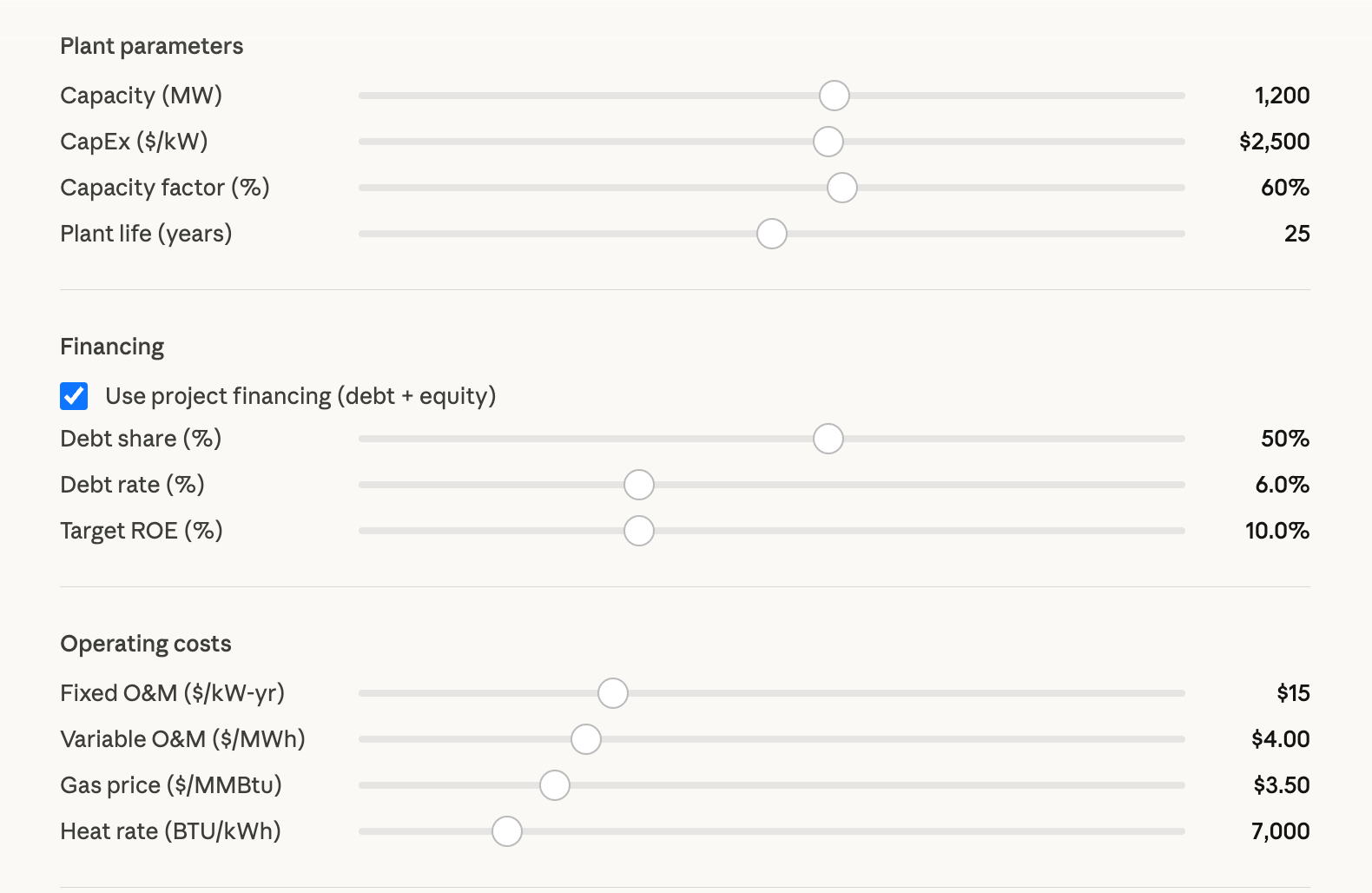
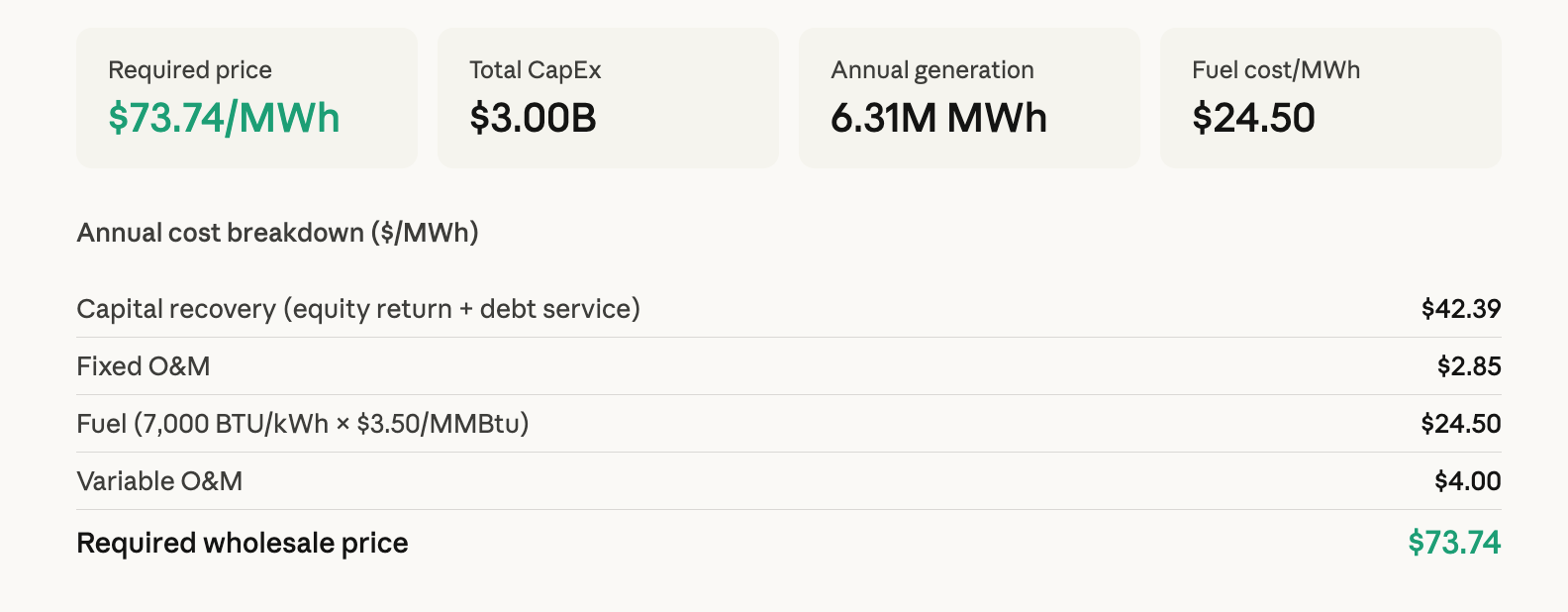
In short, the only customers this plant would be able to serve profitably are those who pay a substantial premium over existing rates. Data centers may be such customers, but while it may be in the interest of data center developers to have a public utility to take on the cost and risk of building new generating capacity at a time when CapEx is two and a half to three times what it was just two years ago, it is not in the public’s interest to do so.
A Special Large Load Tariff Should Be Required For Data Centers
Whether data centers bring their own power and capacity to the grid or not, there is another issue the Commission should consider. Mon Power and Potomac Edison should ensure that costs for additional capacity, transmission, and other infrastructure costs occasioned by data centers are not shifted onto existing customers. This is an issue that President Trump has taken up in his effort to get pledges from hyperscalers and other data center developers that they will insulate existing customers against any rate increases that their facilities might cause. And Utility Dive recently reported that 77 special tariffs designed to shield existing customers are now pending or in place across 36 states. Sadly, it is not apparent that the companies and their corporate parent, FirstEnergy, are committed to that principle.
In remarks to shareholders last fall, FirstEnergy CEO, Brian Tierney, stated that his companies will not seek special tariffs for data center and other large load customers. This is worrying because special tariffs are the most effective means of ensuring that data centers pay for all, or nearly all, of the costs they cause. At the same time, regulated utilities, such as FirstEnergy, whose profitability is driven in large part by the scale of their capital expenditures, are trying to make themselves as attractive as possible to data center developers. One way to do that is to lower electric rates by shifting costs to existing customers.
There are many ways in which costs can be shifted. Utilities regularly argue that the “beneficiary pays” principle should trump the “cost causation” principle in order to shift capital costs for transmission, gas pipelines, and other infrastructure that are incurred only because a prospective large-load customer requires service. Data center demand can also impact a utility’s obligations to PJM’s capacity market requirements, resulting in the socialization of capacity costs. Data centers’ increased demand for natural gas can also indirectly drive up fuel costs, which all must pay. And, the constant possibility that data centers will underperform or fail to materialize can put utility customers at risk of having to absorb otherwise unrecoverable costs.
These potential impacts can be mitigated, but doing so requires the establishment of terms that address the complex and unique challenges and risks that data centers pose. For that reason, it is important that the Commission’s consideration of plans to serve proposed data centers and the ways in which utilities propose to allocate and recover costs take place in a manner that ensures maximum visibility, scrutiny, and accountability. Only the ratemaking process meets that standard. The other means of proposing and considering cost recovery, suggested by Mr. Tierney, is the use of special contracts with large load customers. However, consideration of special contracts is a highly opaque proceeding in which the Commission is made almost entirely dependent on the utility for data and independent analysis is greatly hampered. Regardless of whether the companies or data center developers finance and build power generating resources, it is imperative that the terms on which they do business with public utilities effectively insulate existing customers against adverse consequences and that requires the most rigorous and publicly accessible ratemaking process available.
Finally, special large load tariffs that incorporate requirements for up-front financial commitments from developers can have the salutary effect of refining load growth forecasts and cleaning up the interconnection queue by weeding out speculative and duplicative interconnection requests. These are among the reasons that special large load tariffs are proliferating nationwide.
Renewables And Demand-Side Resources Should Be Fully Explored
In recognition of the need for the grid to meet increasing demand, commissions in Virginia and other states are asking utilities to more fully utilize existing generating and transmission resources and to report their progress in doing so. Virtual power plants (VPP), demand response programs, energy efficiency programs, grid-enhancing technologies, and other resources can greatly increase grid capacity by creating flexibility. These resources are often up to two-thirds less expensive than new gas generation and they can be more quickly deployed. Sadly, the companies have not fully explored the potential contributions of these options and it’s a failure that undermines the purpose of integrated resource planning.
The failure is doubly egregious with respect to energy efficiency. Despite having been ordered to do so by the Commission in 2024, neither of the companies offers customers an energy efficiency program. In other states, EE programs are reducing energy requirements by 1 to 2.5% at costs roughly a quarter of that of new generation and perhaps one-sixth of that for new gas-fired power in the current economic environment.
Based on available evidence, it is reasonable to expect that much of the gap between generation and demand that the companies cite in their application can be addressed through enhanced grid management and the integration of demand-side resources.
Conclusion
Due to the project’s exorbitant cost, the disinterest shown by FirstEnergy in seeking a special tariff to insulate existing customers from data center-driven rate increases, and the utilities’ failure to adequately explore less costly alternative means of ensuring reliable and cost effective service, the Commission should not approve the companies’ plan to construct a new 1.2 GW gas-fired power plant.